

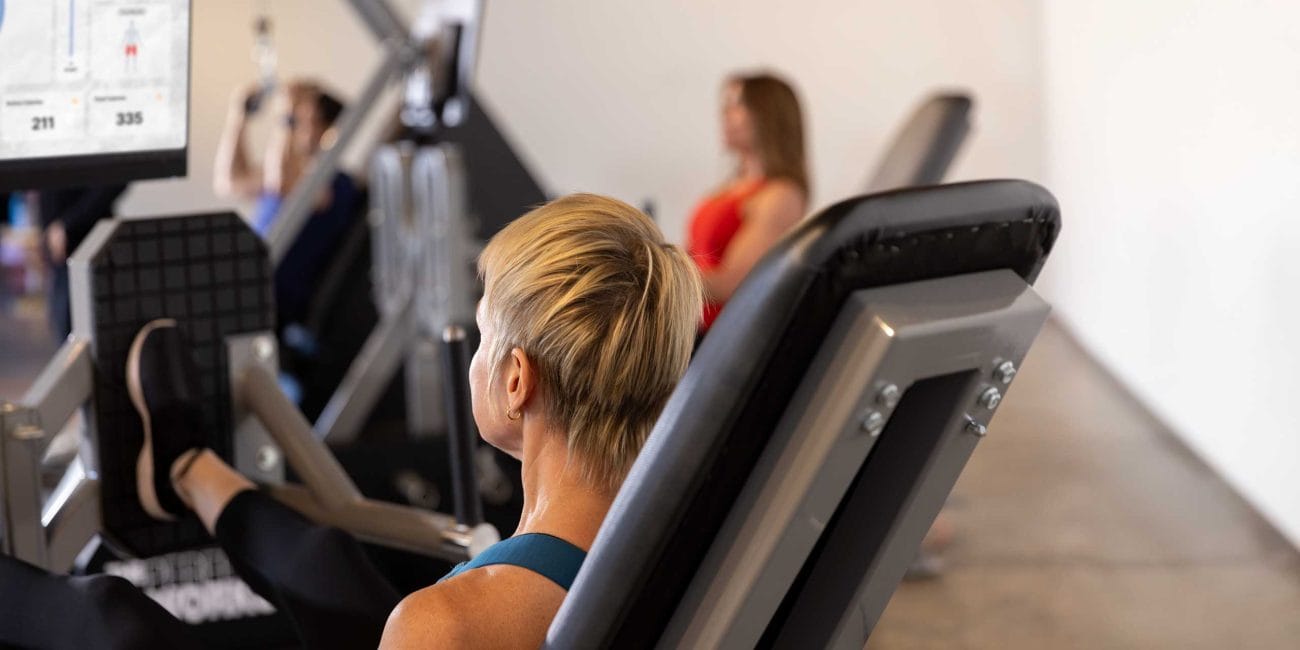
Cardiovascular fitness is a desired benefit of any proper exercise regimen. People commonly spend hours per week jogging, biking, swimming, or on a machine at the gym in pursuit of heart health and improved fitness.
However, it turns out that resistance exercise is the best activity to perform for global metabolic conditioning.
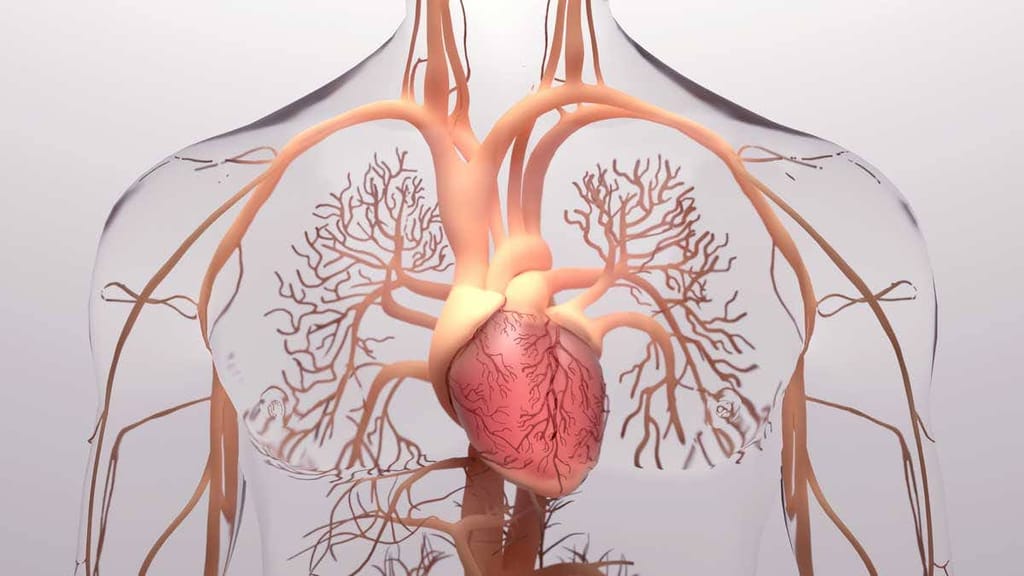
The most heart-healthy fitness technology is FastFit, and it’s not close
Wait, What?
The cardiovascular system’s purpose is to serve the working muscles, and resistance exercise places demands on those muscles most efficiently and most safely as compared to all other types of exercise.
A great example of this is a 2012 meta-analysis in the Journal of Exercise Physiology that found that the types of adaptations one would expect from traditional endurance-type aerobic exercise can be acquired just as completely through resistance training.
These adaptations include (but are not limited to):
- an up-regulation of mitochondrial enzymes
- increased time-to-exhaustion
- enhanced mitochondrial proliferation
- phenotypic conversion from type IIx towards type IIa muscle fibers
- vascular remodeling (including capillarization)
To understand why resistance exercise can have all the same cardiovascular benefits as traditional “cardio,” it is necessary to understand that the cardiovascular adaptations we’re after are produced by the body in proportion to the intensity with which the muscles are made to contract.
For example, all things being equal, higher intensities of exercise (FastFit rather than jogging, for instance) are more effective for improving VO2max, a primary determinant of cardiovascular fitness.
It was also found that, at a sufficient intensity, six minutes of exercise can be just as effective for cardiovascular fitness and condition as an hour of daily moderate activity.
Time and time again the literature suggests that less-intense, longer-duration exercise carries no benefit when compared to more intense — yet brief — exercise.
Hell, intense resistance exercise is even superior for adaptations related to heart health.
The Muscles Are Where The Action Is
The most important point to understand is that when an improvement is observed in someone’s “cardiovascular fitness,” regardless of the activity being performed, what’s actually being observed is an improvement inside the working muscles.
The muscles are where the action is, not the cardiopulmonary system.
An elegant study was performed in 1976 in which the experimenters recruited thirteen subjects and trained them on a stationary bike. But crucially, each participant only trained one leg the entire time.
The trained leg employed a sprint and/or a low-intensity steady-state protocol. The subjects performed four or five of these workouts per week for four weeks.
After the study, when the researchers tested the subjects’ VO2max by having them repeat the exercise with the trained limb, they noted an increase in VO2max of twenty-three percent.
This one-legged exercise was supposed to produce a full-body cardiovascular adaptation, but when the experimenters tested the subjects’ untrained legs, they discovered that the untrained limbs showed no improvement in VO2 max at all.
But wait a minute. If “cardio” improves the heart and the lungs, shouldn’t the full body receive this VO2max benefit? Why didn’t the heart and lungs confer that improvement to both legs?
The answer is the same point I made above, which is that when an improvement is observed in someone’s “cardiovascular fitness,” what’s actually being observed is an improvement inside the muscles, not the heart or lungs.
This is why jogging will give you a better result than walking, running will give you a better result than jogging, and sprinting will give you a better result than running.
A greater demand is being placed on the muscles as you move faster, and as a result, the cardiovascular adaptations become more robust.
From Theory to Practice
The tradeoff here is that you must reduce your total volume of exercise as you increase the intensity, in order to avoid overtraining and injury.
And while this may seem like a bug — “I want to work out for longer, but I can’t!” — it’s actually a huge feature. It means that by briefly placing an intense demand on your muscles, you can provoke every desirable cardiovascular adaptation of which your body is capable.
And what’s the best way to place a brief but very intense demand on the muscles?
Answer: resistance exercise.
And what’s the best tool available for resistance exercise?
Answer: FastFit.
The Elusive Obvious
We now know that the muscles are where the action is. In fact, it appears impossible to access or stimulate the heart and lungs for the purpose of administering an exercise stimulus without the involvement of the muscles.
The harder the muscles are made to work, the greater the cardiovascular adaptations. And this is where FastFit shines, since it is not possible to work harder than “one-hundred percent effort all of the time,” which is one of many options when using FastFit’s responsive resistance.
And not only does our matched resistance allow the user to place the greatest demand possible on the muscles at all times, it does so in a manner that is far safer and far more quantifiable than any other tool available.
The conclusion, then, is unavoidable.
If your goal is to maximally stimulate the cardiovascular system, you need to maximally stimulate the muscles that this system serves and supports.
And since FastFit is currently the best tool available for this purpose, it also means that FastFit is the best tool to condition the cardiovascular system.
Smart!
–
Originally published by Jim Keen, Director of Education, on Medium.com


